
Nitrate. Xavier Ribas
EXTENDED UNTIL MARCH 20, 2016

The photographic exhibition Nitrato by Xavier Ribas represents one of the most visible aspects of the artist's work since 2009. First presented at MACBA in June 2014 and at Bluecoat in Liverpool from April to July this year, the photographs in this exhibition, taken in Chile, Great Britain, Spain, and the United States, will be on display until March 6, 2016, in all the rooms on the basement floor, previously dedicated to Interacciones by Javier Vallhonrat. The origin of Xavier Ribas' artistic work stems from his participation in the Tender Puentes project at the University of Navarra Museum, in which he created one of the works included in the exhibition:Geografías concretas (Ceuta y Melilla).
Curated by Carles Guerra, the exhibition is organized by the Museo d'Art Contemporani de Barcelona (MACBA), co-produced with the Museo Universidad de Navarra in collaboration with Bluecoat Liverpool's Centre for the Contemporary Arts, and supported by Acción Cultural Española and the Arts and Humanities Research Council.
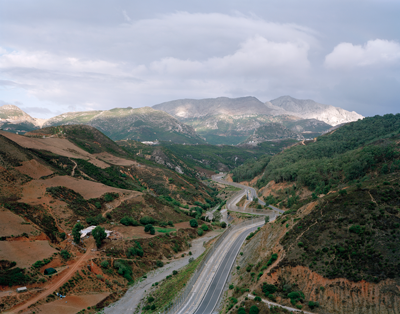
Since 2009, Xavier Ribas (Barcelona, 1960) has developed his photographic work by researching the natural history of Chilean nitrate in response to the photo album Oficina Alianza y Puerto de Iquique 1900, from the University of Navarra Museum Collection. Nitrate is the result of research into this mineral and the colonial exploitation system carried out by some British companies in Chile's Atacama Desert during the second half of the 19th century and until after World War I. Once processed, the mineral was used as a natural fertilizer or as an ingredient in the manufacture of explosives. This case study brings to light the extractivist policies practiced for centuries, especially in South America and Africa.
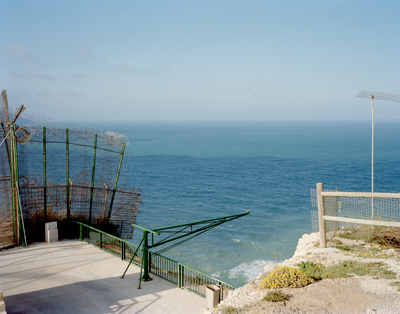
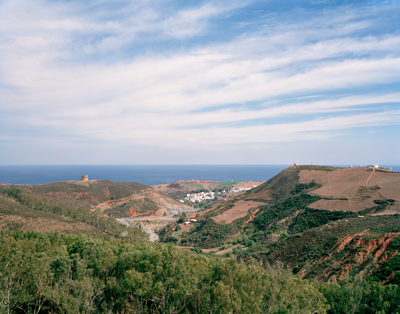
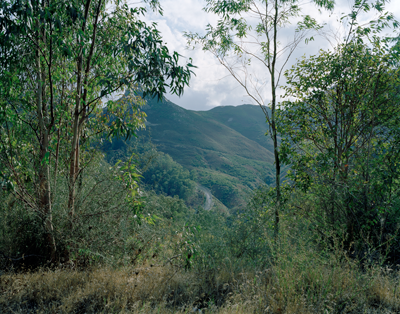
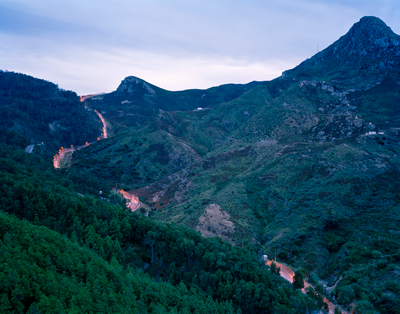
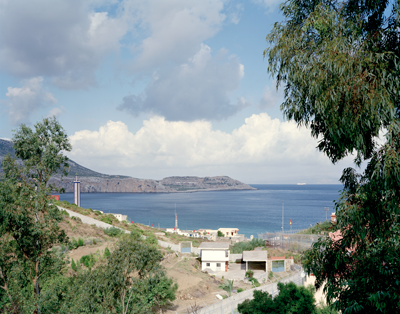
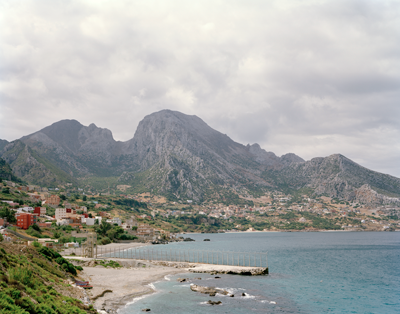
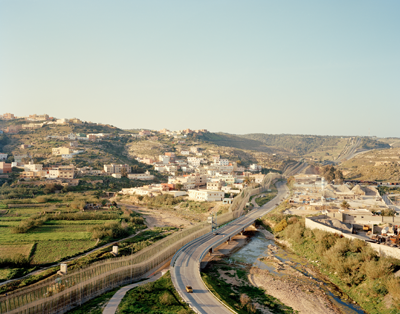
After two decades of work, Xavier Ribas has carved out a reputation as a photographer committed to the geographies of abandonment: suburban areas, roadsides where prostitution takes place or where spaces have been transformed into shrines marking the site of fatal traffic accidents, borders of all kinds, and temporary settlement areas where human presence is subject to expulsion policies. In his project for Tender Puentes, Geografías concretas (Ceuta y Melilla), Xavier Ribas addresses the representation of the contemporary European landscape through two photographic journeys along the border fences of Ceuta and Melilla. In the two photographic grids of 22 and 26 photographs each, the author visualizes the landscape defined by these fences, which simultaneously delimit a colonial border between Spain and Morocco, an economic border between Europe and Africa, a geopolitical border between North and South, and a religious border between Christianity and Islam. The border fences of Ceuta and Melilla are to the European landscape of the 21st century what bridges, tunnels, and railways were to the landscape of the second half of the 19th century and early 20th century, explains the artist.

PUBLICATIONS
XAVIER RIBAS. NITRATE
The catalog for the exhibition Nitrato. Xavier Ribas received the 2015 LAUS bronze award, was selected for the 2015 Prix du libre in Arles, France, and was part of the exhibition The Best Photography Books of the Year at the National Library of Spain as a finalist for best photography book at PHotoEspaña 2015.
SPECIFIC GEOGRAPHIES (CEUTA AND MELILLA)
The origin of Nitrato and, at the same time, a project for the Tender Puentes Collection, Geografías concretas (Ceuta y Melilla), has its own publication edited by Trama Editorial.
XAVIER RIBAS, ARTIST
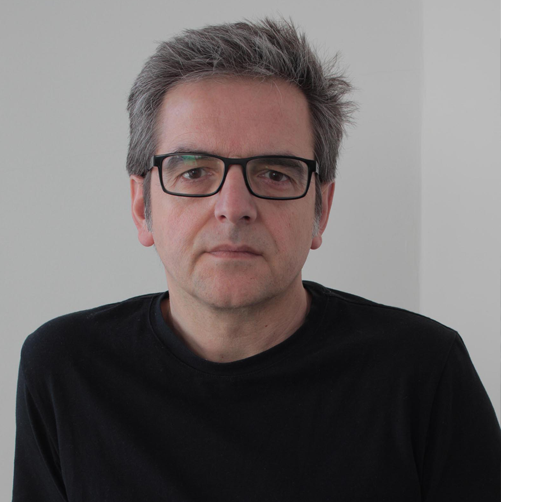
Ribas has participated in numerous international exhibitions, including the Museu d'Art Contemporani de Barcelona (MACBA), the Museo Nacional Centro de Arte Reina Sofía (MNCARS), the Stedelijk Museum, Bluecoat in Liverpool, Belfast Exposed, Aperture Gallery, George Eastman House, Lewis Glucksman Gallery, the Huarte Center for Contemporary Art, and the Dos de Mayo Art Center. His work is represented in important public and private collections, including MACBA, the Stedelijk Museum Fonds National d'Art Contemporain, the University of Navarra Museum, Fotocollectie Universiteit Leiden, the Galician Center for Contemporary Art, and the Andalusian Center for Contemporary Art. He has received awards, commissions, and grants from the Arts and Humanities Research Council (2012-2015), the International Photography Research Network (2006), Commande Publique du Ministere de la Culture et de la Communication de France, Centro Nacional de las Artes Plásticas (2006), and Université de Toulouse II Le Mirail (2007-2008), among others.
His work has been published in several books, including Xavier Ribas (University of Salamanca, 1998), Santuario (Gustavo Gili, 2005), Geografías de hormigón (Ceuta y Melilla Fronteriza Cercas) (University of Navarra Museum, 2012), Geografías concretas (Nomads) (Bside Books, 2012), and Nitrato (MACBA, 2014).
CARLES GUERRA, CURATOR
SOME PHOTOGRAPHS FROM THE EXHIBITION
Date
October 29, 2015
Time
12:00 a.m.