
Take a peek at the dance
 Thursday, September 25, October 10, November 14
 September 25, 5:30 p.m.
October 10 and November 14, 6:00 p.m.
Learning to watch dance is the goal of each of these sessions, in which three experts accompany spectators who are new to dance, providing them with keys to help them connect with three of the works featured in this edition and with their creators.
The sessions are specifically aimed at those who subsequently attend the aforementioned shows and take place just before them.
FIRST SESSION:
Workshop (1st floor of the MUN)
Thursday, September 25, 5:30 p.m.
Marius Petipa and Academic Dance
ELNA MATAMOROS
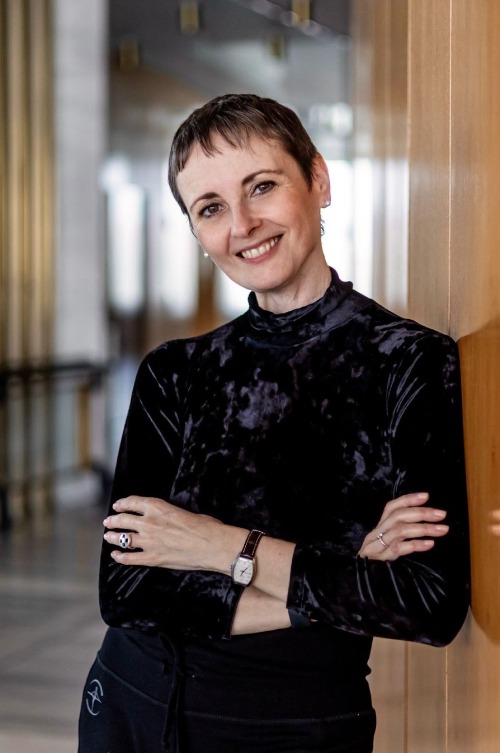
Elna Matamoros (Madrid, 1972) divides her work between the rehearsal room and theoretical research. She holds a PhD in Aesthetics and Art Theory with International Mention from the Autonomous University of Madrid and a Master of Arts in Dance Education from New York University as a Fulbright Scholar. With an extensive career as a dance historian, ballet teacher, and arts educator, she is currently a teacher at the Spanish National Ballet, a contributor to El Cultural, and a specialist teacher and guest researcher at the Zurich University of the Arts (ZHdK). Since 2012, she has been the choreographic assistant to José Carlos Martínez. Her books include Augusto Bournonville, historia y estilo (Madrid, Akal, 2008) and Dance & Costumes (Berlin, Alexander Verlag, 2021). She is a full member and president of the Architecture and Fine Arts section of the Royal Academy of Doctors of Spain.
SECOND SESSION:
MUN Classroom 2
Friday, October 10, 6 p.m.
Lucía Campillo
Martha Otazu
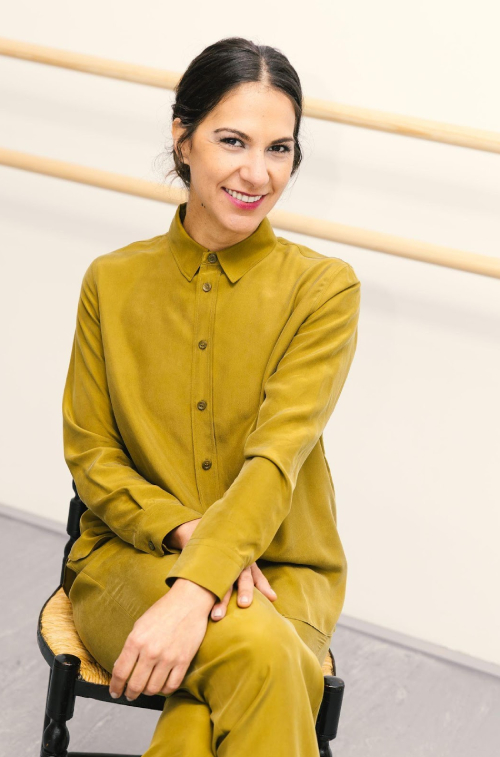
With a degree in Dance Education and an Extraordinary Final Degree Award from the María de Ávila Higher Conservatory of Dance, and a master's degree in Cultural Project Management with an Award for Best Project of the Year (2019-2020), Marta Otazu combines production management for various dance shows with teaching.
After more than 20 years working as a performer alongside leading choreographers and Spanish dance and flamenco companies, she entered the world of production and company management in a sector she knows well. Since founding her own company, La Figuranta, she has managed the production of various shows at Los Teatros del Canal, Festival de l'Herencia (Barcelona), Festival de Jerez, and Flamenco Festival de Londres, among others.
He also runs the brand's Spanish dance and flamenco training center, which has more than 50 students in its regular training program and organizes workshops for professionals, talks, and theory classes.
THIRD SESSION:
Classroom 2 (floor -1 of the MUN)
Friday, November 14, 6:00 p.m.
Automata, robots, and breakers
About Irons Skulls Co. and Famulus 4.0
Robots are the heirs of automatons, mechanical devices that were seen in traveling shows in the 18th and 19th centuries. Literature is full of stories about human-shaped objects that come to life, some of them macabre, others moralistic. Robotics is present in science fiction, cinema, and comics, but also in restaurants, hotels, factories, and hospitals.
In the ballet Coppelia—a light adaptation of Hoffmann's story The Sandman—a doll seemed to come to life. Perhaps it was an illusion, but the desire to create objects that are increasingly similar to humans or other living beings remains intact, amplified today by digital universes, algorithms, and Artificial Intelligence. It is likely that these robotic devices can already do things better than humans; we can include them on stage, at home, at work. A robot does not love, but that is beside the point, since the transfer of affection is carried out by humans. Who has not taken care of a Tamagotchi?
ANA CABO

Founding partner of Cultoría Artes e Industrias Creativas SL, a company specializing in consulting, development, and management of cultural, performing arts, and creative industry projects and programs. She is currently artistic director of the El Escorial International Summer Festival of the Community of Madrid, external consultant for the Cabildo de Canarias and the Regional Ministry of Culture, Tourism and Sport of the Community of Madrid, guest lecturer at the University of Navarra, Degree in Communication, in the subject Promotion and Sales of Performing Arts, and guest expert at the María Pagés Choreographic Center. Until 2021, she has designed and coordinated projects for the Elephants in the Black Box Company, a comprehensive international project dedicated to the production, choreographic creation, and promotion of young dance talent. In 2020, she was the artistic director of the Escena Estrena Festival of the Community of Madrid and of Baile de la vida, dance at the Prado Museum dedicated to the work of Bosch.
She is the editor of the first Cuaderno de Creación (Creation Notebook) dedicated to Javier Martín, published by the University of Navarra Museum.
Date
September 25, 2025
Time
5:30 p.m.