
Singing workshop. How to convey emotions with your voice
Dates: October 10, 17, 24, and November 7
Time: 2:00 p.m. to 4:00 p.m.
CLASSROOM 2
20 spots available
General price: €90
Price for students: €35
Workshop taught by Luis Miguel Alonso Nájera
An approach to the voice and its possibilities as an instrument of communication and transmission of emotions
This workshop is aimed at students interested in the voice and provides an introduction to its nature, its possibilities as an instrument of communication, and its role in the live transmission of information—in its broadest sense—and emotions. Of our five senses, acoustic perception achieves a unique degree of connection, an intimate and sensitive link between the person and/or source emitting the sound and the person receiving it.
Like any human expression that seeks to transcend the merely functional, the use of the voice and the development of its immense possibilities must combine a deep technical knowledge with the emotional flow that all good speech or singing always carries with it.
To this end, the workshop includes a presentation on the physiological nature of the voice, the characteristics of vocal production, the two main fields of spoken and sung voice, and the application, resources, and expressive possibilities in each case.
In addition to theoretical explanations, practical examples of both spoken and sung voice will be worked on, according to the particular interests of the students.
Each session is expected to include both theoretical content and practical work with students.
As a guideline, the following distribution is proposed:
SESSION 1
1 - Nature of the human voice. Mode of emission. Voice hygiene. Most common mistakes in voice use.
2 - The human voice and the singing voice – Similarities and differences.
3 – Natural voice emission and amplified emission.
4 – Practical work based on students' knowledge: reading, improvisation, singing.
SESSION 2
1 – Vocal technique and interpretive emotion. Reason and emotion in art.
2 – Oral communication before an audience:
a) General approach. Conviction. Honesty. "Theatrical" attitude.
b) Content – Outline of the speech.
c) Intonation, projection.
d) Time management.
3 – Practical work.
SESSION 3
1 - The singing voice – Various lyrical genres:
a) Lyric theater: opera, operetta, zarzuela, musical.
b) Oratorio genre. c) Song, lied. d) Symphonic-vocal.
2 – Presentation and analysis of comparative examples.
3 – Practical work.
SESSION 4
1 – Analysis of a lyrical work according to author, historical context, etc.
2 – Relevance of classical lyrical forms in the contemporary world.
3 – Review of the issues discussed in the workshop.
4 – Practical work.
Luis Miguel Alonso Najera
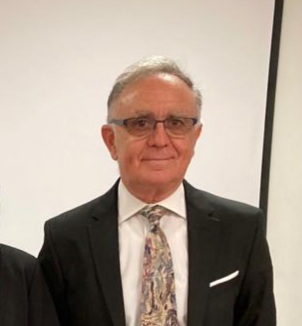 Doctor of Architecture from the University of Navarra. He began his studies in music theory and singing at the Pablo Sarasate Conservatory in Pamplona, continuing his training with various private teachers. He has also taken courses in vocal technique with professionals in the field. He played the role of Ruiz in the opera production. The Troubadour, by Verdi, performed by the Gayarre Association of Friends of the Opera of Pamplona (AGAO) in November-December 2001, and has participated as a member of the AGAO choir in various productions from 2002 to the present. He has appeared as an actor in the staging of The Beggar's Opera (The Beggar's Opera) and Hansel and Gretel performed by the Navarra Chamber Opera (OCN) at the Gayarre Theater in Pamplona.
He is the author of various prose and verse texts, and has contributed to the periodical magazine of the Navarra School of Theater, in which he has published various texts on the relationship between the architectural space built for performance and the human activity carried out within it. For years he has been teaching courses with monographic sessions on topics related to poetry. He is currently president of the Gayarre Association of Friends of the Opera of Navarra.
Date
October 10, 2022
Time
2:00 p.m.