
Navarra Symphony Orchestra
Concert by the Navarre Symphony Orchestra
Directed by Iñigo Pirfano and performed by mezzo-soprano Ahinoa Zubillaga.
The current OSN was founded by Pablo Sarasate in 1879 and is currently the oldest active professional orchestra in Spain.
Prices*: €24 (patio) and €18 (amphitheater)
*Discounts for Friends of the Museum (depending on type)
*20% discount for students and employees of the University of Navarra

PROGRAM
PART 1
- El preludio de El Caserío, Jesús Guridi
- El Amor Brujo, M. de Falla
Mezzo-soprano: Ainhoa Zubillaga
PART 2
- Symphony No. 7 in D minor, Op. 70. A. Dvorák
Navarra Symphony Orchestra
Director. Íñigo Pirfano
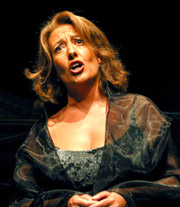 Ainhoa Zubillaga Ainhoa Zubillaga |
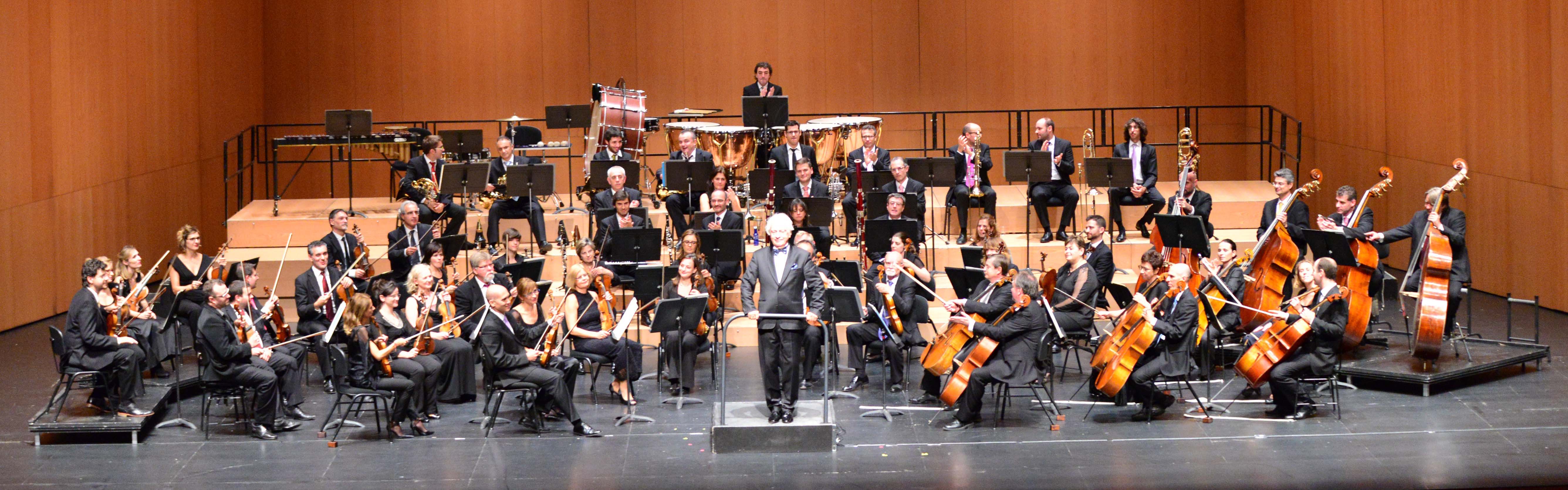 Navarra Symphony Orchestra Navarra Symphony Orchestra |
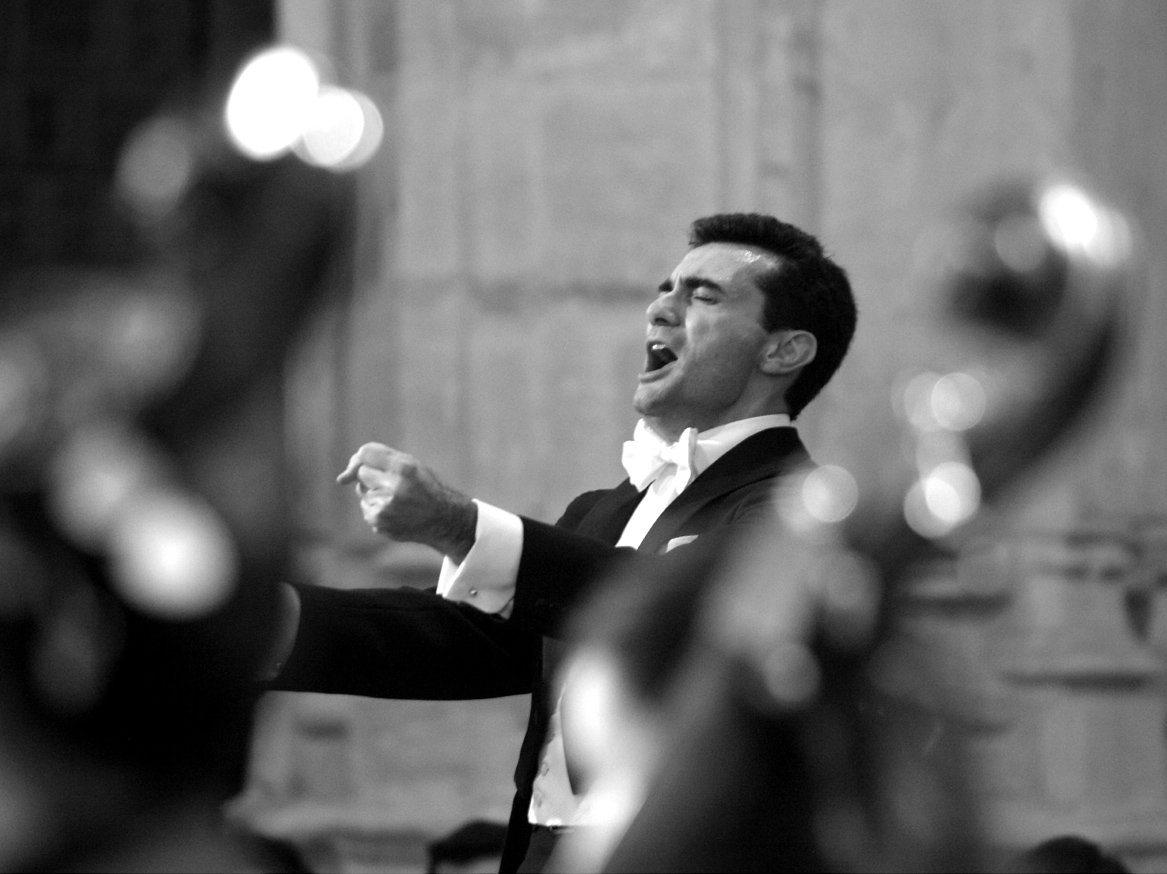 Íñigo Pirfano Íñigo Pirfano |
AINHOA ZUBILLAGA
He performs an extensive repertoire in recitals as well as symphonic and oratorio concerts.
He has participated in numerous festivals, concert series, concert halls, and auditoriums in Austria, Cuba, Spain, France, Great Britain, Holland, Mexico, Poland, and the Czech Republic (Musikverein, Halle aux Grains, Teatro Real, Auditorio Nacional, Teatro Monumental, Quincena Musical, Mozart Festival in La Coruña, Nantes Festival, Religious Music Week in Cuenca 26) with prestigious orchestras (Russian National Orchestra, Latvian National Orchestra, Lyon National Orchestra, Toulouse Capitol Orchestra, Vienna Symphony Orchestra, Galicia Symphony Orchestra, Balearic Symphony Orchestra, Royal Philharmonic Orchestra of Galicia, RTVE 26) and conducted by maestros such as Ceccato, Griffiths, Kout, López Cobos, Mena, Victor Pablo Pérez, Pletnev, Pons, Ros Marbá, Wilson 26
In the field of opera, he has participated in several productions by A.B.A.O, Quincena Musical, Las Palmas Opera Season, Malaga, Teatro Real in Madrid, Lyon Auditorium, Halle aux grains 26.
She collaborates as a guest soloist with various early music ensembles.
NAVARRA SYMPHONY ORCHESTRA
The current OSN, Spain's oldest active professional orchestra, was founded by Pablo Sarasate in 1879.
The OSN covers the widest repertoire, regularly collaborates with world-renowned soloists and conductors, and is considered one of the best orchestras on the Spanish scene. It is frequently invited to concert halls and festivals of the highest national and international standing, including, in recent years, repeated invitations to the Théâtre des Champs Elysées and the Théâtre du Châtelet in Paris, as well as its recent tour for Universal Music to the main concert halls of European capitals (Konzerthaus, Concertgebow, Gasteig, Smetana Saal, Festpielhaus-Baden Baden, etc.).
Currently, the OSN's Principal Conductor and Artistic Director is Maestro Antoni Wit.
ÍÑIGO PIRFANO
In 1997, he enrolled at the Universität für Musik und darstellende Kunst "Mozarteum" in Salzburg (Austria), where he studied Orchestral, Choral, and Opera Conducting. There he graduated with a degree in conducting, obtaining the highest grade (Auszeichnung). He conducted, with great success, the extraordinary concert at Schloss Frohnburg of the Mozarteum in Salzburg, where, in addition to performing works by Stravinsky and Falla, he premiered works by young composers from the Seminar für neue Musik (Seminar for New Music) at that school. He subsequently undertook advanced studies with Sir Colin Davis in Dresden and with Karl-Heinz Bloemeke and Kurt Masur in Detmold (Germany). He completed his academic training with a master's degree in Choral Conducting from the University of Music in Graz (Austria) and a year of practical training (Hospitanz) at the Nuremberg Opera, alongside maestro Marcus Bosch.
He has conducted in some of the most important concert halls in Spain, Germany, Austria, Poland, and Brazil, with orchestras such as the Euskadi Symphony Orchestra, Bilbao Symphony Orchestra, Szczecin Philharmonic Orchestra, Frohnburg Ensemble of Salzburg, Bundeswettbewerb Jugend Musiziert Orchestra, Blutenburg Kammerphilharmonie München, National Symphony Orchestra of Colombia, etc. always receiving unanimous praise from critics and audiences alike. In 2002, he made his operatic debut with a production of Manuel de Falla's El Retablo de Maese Pedro, which was highly praised by critics, on the occasion of a tribute by the Círculo de Bellas Artes in Madrid to Miguel de Cervantes. He is the founder and principal conductor of the Orquesta Académica de Madrid, with which he has given numerous concerts in recent years. For his work at the helm of this orchestra, he received the 2011 Young Leadership Award from the Rafael del Pino Foundation.
PROGRAM DESCRIPTION
The symphonic program that closes the Cartographies cycle at the University of Navarra Museum is structured around the concept of Earth, with all the richness of depth and breadth that this word encompasses. Because to speak of Earth is to speak of People, Culture, Tradition, Language. But beyond all that, Earth refers to a common substrate that underlies the richness of a constitutive diversity. This diversity is the guarantee and hallmark of what makes us human, beings in relationship; local and universal at the same time.
The works that make up this program—approached from a cross-cutting perspective of the concept of Earth—offer three very interesting and complementary proposals from this point of view: those of three great figures of musical creation who can be considered eminently nationalistic and, at the same time, universal.
The prelude to Act II of the zarzuela El Caserío contains some of the most evocative and accomplished pages by the magnificent composer Jesús Guridi from Vitoria. The piece begins with a beautiful czortziko, one of the most characteristic Basque dances, due to its marked rhythmic structure in five-part time. This beautiful section gives way to a second atmosphere, in which the composer masterfully introduces an imitation of the national instrument: the txistu. After a highly lyrical passage in which the strings take center stage, the second section leads into the sparkling final dance, bringing the prelude to a brilliant and brilliant conclusion. The popular festival, the local color, the weight and presence of tradition come together in these inspired bars, which have already become a reference point in the world of symphonic literature.
Manuel de Falla's El Amor Brujo is part of the universal repertoire on its own merits. In this undisputed masterpiece, later reorchestrated from the first version of 1915, which was much more limited from an instrumental point of view, the composer handles the themes and turns of phrase typical of flamenco and Andalusian folklore, giving them an essential and unique voice. Some of its pages—such as the Romance del Pescador—reveal Falla at his most brilliant and inimitable, capable of creating a transfigured and poetic atmosphere with a very small number of elements.
Finally, Antonín Dvorák's Symphony No. 7 in D minor, Op. 70—a work that is, unfortunately, as perfect as it is little known to the general public—responds to the paradigm of local Slavic music. In fact, the composer himself referred to it in the following terms:
"The first theme of my new symphony flashed into my mind like the arrival of a festive train bringing our peasants from Pest."
With this work, Dvorák set out to reflect, in some way, the political struggles of the Czech nation. This struggle was nothing more than a reflection of the composer's own inner tension; a way of reconciling the peaceful feelings of a humble peasant with the patriotic sentiment of someone who wanted to see his beloved Czech nation prosper.
The fascination that the premiere of the Third Symphony by his friend and mentor Johannes Brahms had exerted on Dvorák prompted him to work on this beautiful symphony, commissioned by the London Philharmonic Society, which is every bit as good as Brahms's. Reaffirming the connection between the local and the universal that justifies this program, Dvorák stated:
"I am busy now with this symphony for London, and wherever I go I cannot think of anything else. May God grant that this Czech music moves the world!"
Date
March 10, 2016
Time
8:00 p.m.