
The Fable of the Well-Kept Secret. Alejandro Casona
The museum's exhibition halls will be the setting for La Fablilla del secreto bien guardado (The Fable of the Well-Kept Secret) by Alejandro Casona, adapted and directed by Liuba Cid. The dramatized reading will share the stage with contemporary art in a creative interplay in which painting and its visual power envelop the characters' actions and their ingenious dialogues, like a theatrical backdrop.
General admission: €8
Discounts for Friends of the Museum apply to General Admission prices (more information here), Youth Card holders, university students, large families, groups of 10 or more people, and employees of the University of Navarra. Detailed information can be found here.
This show does not have a Youth Rate.
There is no secret better kept than the one no one wants to believe.
Alejandro Casona
THE WORK
Alejandro Casona (1903–1965), master of Spanish drama and author of the Generation of '27, drew inspiration from the works of Cervantes, Boccaccio, the Pasos de Lope de Rueda, and folk tales with a strong oral tradition.
This theatrical farce, belonging to Retablo Jovial, published in 1949, is one of the short pieces that comprise it and date back to 1931, when Casona embarked on the "Pedagogical Missions" of the Second Republic and was appointed by Manuel Bartolomé Cossío as director of the traveling theater, or "Teatro del Pueblo," an educational project to bring the great classics of Spanish theater to the common people.
The fundamental themes of the Fablilla are "mockery" and "deception," and it forms part of an excellent collection of short plays with a comical tone and humorous subjects. The stage design, the invention and characterization of the characters, the staging of situations, and the comedy of the dialogues have been freely drawn by the author to bring the characters to life, turning it into a delightful stage play full of insight, written in the 20th century in the style of Cervantes' interludes and the best theater endowed with action, tradition, and popular wit.
THE PLOT
Juanelo, a young farmhand, finds a treasure while working in the fields. His initial joy turns to deep concern, as he thinks about the serious problems it could cause if Leonela, his talkative wife who is incapable of keeping even the smallest secret, finds out. The humble farmer arrives home thinking about hiding the treasure, but suddenly there is a knock at the door. It is Bruno, his father, who has been out hunting with his shotgun and a bag containing a plump hare and a net holding a beautiful trout.
The father senses his son's concern, and Juanelo finally tells him what happened. Amid reflections, arguments, and advice, Juanelo suddenly comes up with a solution: he asks his father to put the hare in the net and the trout in the game bag. When Leonela arrives at the ranch, Juanelo puts his plan into action to prevent the secret from being revealed to the whole neighborhood. He tells his wife that he caught a hare in the forest that morning, hunted a trout, and found a treasure, all in the same morning.
First incredulous, but later overcome with joy and happiness, seeing herself as rich and leaving behind the poverty that had accompanied them throughout their lives, the woman swears and promises not to tell anyone. Soon after, Asunta, the neighbor, arrives, and Leonela tells her the secret, but the absurdity of the story and the two "miraculous" events—catching a hare and hunting a trout—make the neighbor think she is crazy.
Juanelo achieves his goal through trickery, because, as the protagonist of the fable himself says: "There is no secret better kept than the one no one wants to believe."
CAST
LEONELA
Angeles Martin
JUANELO
Aitor Merino
BRUNO
Roberto Correcher
ASUNTA
Maiken Beitia
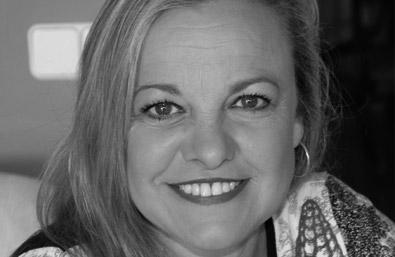 |
Ángeles Martín is an actress, producer, and entrepreneur. She graduated from the Royal School of Dramatic Arts in Madrid. In her early career, she combined work as a presenter with her true passion: acting in theater and television. She made her debut in 1985 with the play La Revoltosa. A year later, she appeared in her first television series, Segunda enseñanza, directed by Pedro Masó with scripts by Ana Diosdado. Over the following years, she combined her theater experiences with occasional appearances in television series, making her film debut in 1988 with the movie Soldadito español, by Antonio Giménez Rico. He then appeared in Libertarias by Vicente Aranda, set during the Spanish Civil War, alongside Ana Belén and Victoria Abril. Since the late 1990s, he has maintained a steady career on stage, starring in the plays: Café cantante, by Antonio Gala, with Nati Mistral; La opinión de Amy, with Amparo Baró; Mañanas de abril y mayo, directed by Miguel Narros; Casa de muñecas, by Ibsen, directed by María Ruíz; El manuscrito encontrado en Zaragoza by Francisco Nieva, produced by the CDN; Molière's El misántropo for the Almagro festival; Tres sombreros de copa directed by Gustavo Pérez Puig; among other plays. |
|
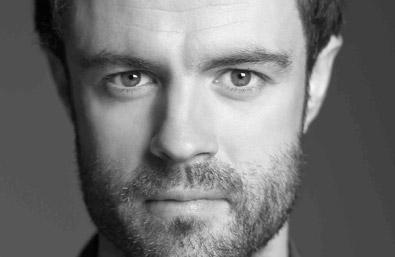 |
Aitor Merino has spent most of his career as a film, theater, and TV actor, working on over twenty movies with directors like Montxo Armendáriz, Pilar Miró, Vicente Aranda, Manuel Matji, and Icíar Bollaín, among others. His first short film as a director, El Pan Nuestro, won awards at numerous national and international festivals and was nominated for the Goya Awards. Asier ETA biok (Asier and I) was his first feature film as a director. He is currently in the process of creating his next film, Fantasía, a task he combines with his work as an actor. |
|
 |
Roberto Correcher is a prominent theater, film, and television actor. His solid acting training comes from the acting schools of Miguel Narros, J. C. Corazza, Cristina Rota, and Mariano Barroso, among others. Throughout his professional career, he has worked in theater with directors such as Miguel Narros in La Dama Boba, with Antonia San Juan and Miguel Hormigo in Making Off, with José Tamayo in Luces de Bohemia and Cementerio de Automóviles, under the direction of Juan Carlos Pérez de la Fuente (CDN), among others. He has worked as an actor in numerous series, including: Aída, directed by Mar Olid; Aquí no hay quien viva on Antena 3, directed by Laura Caballero; El comisario, directed by Jesús Font; and Los misterios de Laura, directed by Alejandro Bazzano. |
|
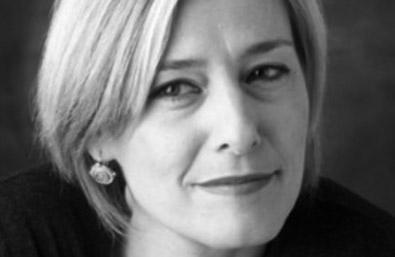 |
Maiken Beitia is a versatile actress from Navarre who combines film, theater, and television, both in Basque and Spanish. In theater, she has worked under the direction of Ramón Barea (Euskadi, Euskadi), Salvador Távora (Pasionaria, No Pasarán), Carme Portaceli (La Casa de Bernarda Alba) and Fernando Bernués (No me hagas daño and Nacidos culpables), among others. She has appeared in numerous television series, most recently Karabudjan, Cuéntame cómo pasó, Sin Identidad, and Goenkale. In film, she has worked with Montxo Armendáriz (Silencio Roto and Obaba), Ernesto del Río (Valeria Descalza), and Juan Ortuoste (Entre todas las mujeres), her latest work being Acantilado by Helena Taberna. He has his own theater company, EL BUCLE PRODUCCIONES, with which he has produced, among other projects, Nosotras by Alberto Iglesias and La discreta enamorada by Lope de Vega, both directed by Pedro Miguel Martínez. |
ARTISTIC CREDITS
ADAPTATION AND DIRECTION
Liuba Cid
SOUND SPACE
LC Performance
SOUND SYSTEM
University of Navarra Museum
LIGHTING
University of Navarra Museum
Date
November 3, 2017
Time
7:30 p.m.