
Falstaff
Symphony Orchestra, Choir, and Theater Training Program of the University of Navarra
 Tuesday, April 1 and Wednesday, April 2
 19.30 h
 €29*
€29*
*Discounts for employees (€23.20), university students (€18.20), Youth Card holders (€18.20), and other reduced rates that apply at the time of purchase.
MUN Theater
THE WORK
A lyrical comedy in three acts with music by Giuseppe Verdi and libretto by Arrigo Boito.
Falstaff, Verdi's last operatic creation, is a masterpiece of comic opera, a celebration of wit and humor. With a libretto by Arrigo Boito, this opera is inspired by Shakespeare's The Merry Wives of Windsor and Henry IV. The story follows the zany adventures of Sir John Falstaff, a roguish and shameless knight who seeks to seduce two married women in order to improve his financial situation.
The libretto combines comedy, irony, and a sharp analysis of human relationships, reflecting on universal and timeless themes such as vanity, greed, forgiveness, and redemption through laughter. Falstaff is not only a feast of music and comedy, but also a reflection on life itself, full of optimism.
CROSS-CUTTING PROJECTS
Since 2022, the MUN, through its Creative Campus area, has sought to involve as many students as possible from different faculties and centers of the University in its programming.
La Zarzuela de los Paraguas was the first project. In addition to the University of Navarra Symphony Orchestra and Choir and the Theater Training Program, it involved students from the School of Communication and the School of Architecture.
In 2023, Carl Orff's Carmina Burana saw the addition of a large participatory choir to the usual artistic lineup , including the Youth Section of the Orfeón Pamplonés and the Youth Choir of the Community of Madrid. The stage concert was performed at the MUN Theater and also at the Symphony Hall of the National Auditorium in Madrid, to great critical and public acclaim.
In 2024, a step forward was taken with the programming of the first opera at the MUN: Tosca, by G. Puccini. This production was the starting point for now undertaking this great premiere, Falstaff, by Verdi.
SYNOPSIS BY ACTS
Act I
Sir John Falstaff, an aging, gluttonous knight, devises a plan to line his pockets by courting two wealthy women from Windsor: Alice Ford and Meg Page. To do so, he sends identical love letters to both of them. However, the women, who are close friends, quickly discover his ruse and decide to teach him a lesson. Meanwhile, Ford, Alice's husband, begins to suspect something and plots his own strategy to unmask Falstaff.
Act II
Convinced of his irresistible charm, Falstaff goes to a rendezvous with Alice at her house. The women, witty and determined, set in motion an amusing plan to humiliate him. Meanwhile, Ford, in disguise, tries to get information from Falstaff about his supposed romance with Alice, causing hilarious confusion.
Act III
Despite his failures, Falstaff does not give up. The women organize one last deception: they invite him on a nighttime date in Windsor Forest. There, disguised as fantastical creatures, all the characters conspire to ridicule him. However, Falstaff, true to his character, takes the situation with humor and recognizes that, in life, we are all subject to ridicule at some point. The opera culminates in a brilliant choral fugue that celebrates wit, laughter, and humanity.
BIOGRAPHIES
Borja Quintas, musical director
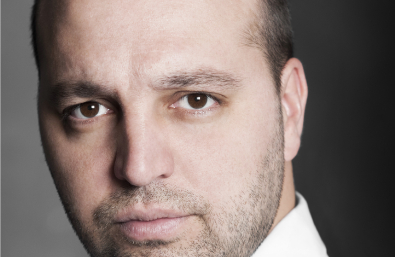
The prolific conductor Borja Quintas has conducted some of the world's most important ensembles, such as the London Symphony Orchestra and the New Russia Symphony Orchestra, always combining the symphonic world with opera, and accompanying soloists of the stature of Plácido Domingo, Javier Camarena, Ainhoa Arteta, and María Bayo.
Strongly committed to young symphony orchestras as a driving force for artistic and social change, he is currently Artistic Director of the University of Navarra Symphony Orchestra, the JMJ Symphony Orchestra, Choir, and Choir School, and the UCAM Symphony Orchestra. He also teaches at the Conservatory of Music of Aragon and the Katarina Gurska Higher Education Center, where he directs the Master's Degree in Conducting.
Trained exclusively as a conductor at the Tchaikovsky Conservatory in Moscow, he works mainly in Russia and Spain, although he has performed in most European capitals and in Middle Eastern countries such as Azerbaijan, Georgia, and Kyrgyzstan.
Liuba Cid, stage director
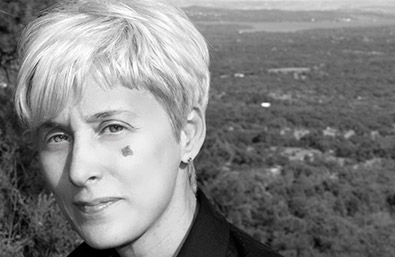
Doctor cum laude in Arts and Humanities from Rey Juan Carlos University, Master's degree in Performing Arts. Graduated from the University of the Arts of Cuba in the specialties of Stage Direction and Performance. Interim professor and researcher at Rey Juan Carlos University in Madrid. She is also a member of the Spanish Academy of Performing Arts. She completed her training as a stage director in Italy, Germany, the United States, and Latin America, working with internationally renowned figures. She won the award for Best Staging and Best Stage Design at the Chicago American Community Theatre Festival (1994).
She has directed more than 50 theatrical productions, with a special focus on contemporary interpretations of the classics of the Golden Age, with premieres at leading festivals: Almagro International Classical Theater Festival, Olmedo Clásico, FIT in Cádiz, Cáceres Classical Theater Festival, Castell de Peralada Festival, etc.
Her shows have been staged at the Teatro de la Maestranza in Seville, the Teatro Calderón in Valladolid, the Palacio de Festivales in Santander, the Auditorio Kursaal in San Sebastián, the Teatro Apolo in Madrid, the Teatro Galileo in Madrid, the Teatro Falla in Cádiz, the Miami Dade County Auditorium, the Cairo Opera House, and the Alexandria Opera House, among others.
She currently collaborates with the University of Navarra and the University of Granada as a researcher and specialist in set design, stage direction, and theater training. Since 2009, she has directed the Mephisto Teatro company, which brings together actors, designers, and choreographers from all over Europe, Latin America, and Spain.
Omar Kamata (Falstaff) - baritone
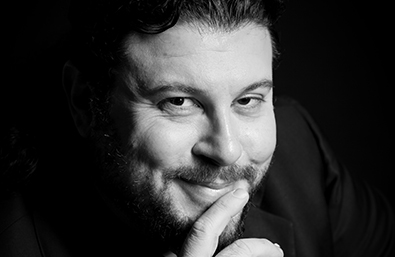 Omar Kamata graduated in singing from the Vicenza Conservatory and won international competitions such as the Toti Dal Monte and the Alfano Lyric Competition (broadcast on RAI UNO).
A versatile voice, he is called upon to perform leading roles in a wide repertoire, from Il Barbiere di Siviglia to Don Giovanni, including L’elisir d’amore, La Bohème, Rigoletto, and Otello. He has starred in world premieres and rediscoveries of rare operas.
He has collaborated with prestigious directors and filmmakers and has performed in theaters such as the Royal Opera House Muscat, the Greek National Opera, the Teatro Petruzzelli in Bari, Suntory Hall in Tokyo, and the Art Center in Suel.
He has participated in festivals such as the Arena di Verona, the Aspendos International Festival, and the Epidaurus Festival in Athens. His career has taken him to Europe, Asia, the Middle East, America, and Australia.
Nomachi Tomohiro (Ford) - baritone
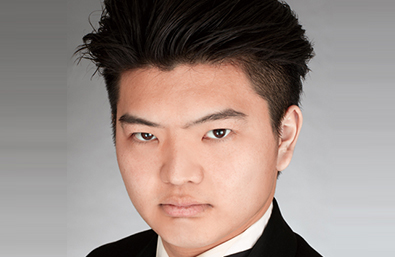 Tomohiro Nomachi is a Japanese baritone born in Kochi and currently residing in Italy. He trained at the Tokyo University of the Arts, where he obtained his Bachelor's and Master's degrees in Lyric Singing under the tutelage of Kazuko Nagai. He later perfected his technique at the Opera Studio of the New National Theatre Tokyo with Jun Aguni.
His operatic career includes notable performances on stages in Japan and Italy. He has played roles such as Masetto and Don Giovanni in Don Giovanni, Mercutio in Roméo et Juliette, Conte in Le nozze di Figaro, and Alfio in Cavalleria Rusticana. In recent years, he has participated in European productions such as Tosca ( Scarpia) in Milan and Silvano ( Renzo) in Livorno.
With solid vocal technique and refined dramatic expressiveness, Nomachi continues to consolidate his career on the international opera scene.
Julen Jiménez (Fenton) - tenor
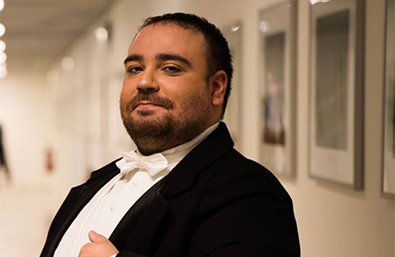 He completed his professional training as a performer at the Pablo Sarasate Professional Conservatory of Music in Pamplona, after which he enrolled at the Higher School of Singing in Madrid.
In the field of opera, he has performed roles such as Silango in Le Cinesi, Bob, Jonás, and Emperor Badulio in Cuento de Navidad, El flautista de Hamelín, and El traje nuevo del emperador by Íñigo Casalí; and has participated in opera productions by the Baluarte Foundation such as Manon Lescaut, Un ballo in maschera, and La Bohème; and in the MUN's production of Tosca , as Spotellta. In the field of zarzuela, he has played roles such as Fernando Soler in Doña Francisquita, Txomin in El Caserío, and Juan de Dios in La Chulapona, as well as Dato in the revival of Emilio Arrieta's San Franco del Sena at Baluarte. In oratorio, he has performed the tenor solo parts in Mozart's Requiem and Great Mass in C minor, Gounod's Missa Solemnis de Santa Cecilia, and Mendelssohn's Lobgesang .
Enrique Ferrer (Dr. Cajus) - tenor
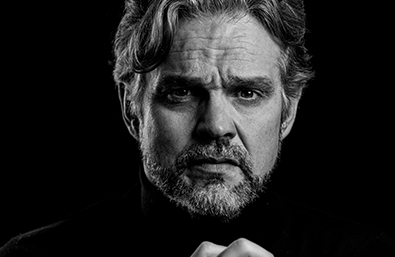 He began his musical studies at the Royal Conservatory of Music in Madrid under Maestro Pedro Lavirgen, and received a scholarship from The Academy of Vocal Arts in Philadelphia, where he graduated with a degree in lyric art. He later perfected his skills in Milan.
He has won prizes in several singing competitions, including Logroño, Jaume Aragall in Barcelona, Ernesto Lecuona in Havana, and Luciano Pavarotti in Philadelphia.
He is a regular performer at major theaters and auditoriums in Spain, Europe, and the United States, where he has developed a remarkable repertoire of opera, zarzuela, and oratorio.
He has collaborated with the Deutsche Grammophon record label on the album Zarzuela Viva Madrid and made a DVD recording for the Bongiovanni record label of F. Alfano's opera La leggenda di Sakuntala, performed live at the Teatro Massimo Bellini in Catania.
Guiomar Cantó (Alice Ford) - soprano
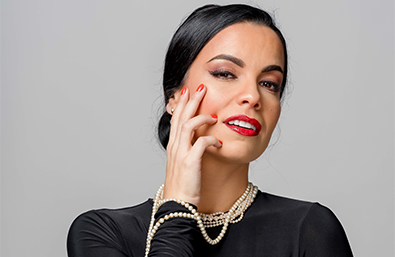 He made his debut at the Teatro Real in the opera Carmen and played Gretel in the production of Hansel and Gretel at the Royal Theater of El Retiro. At the National Auditorium, he has presented works such as Handel's Messiah, Haydn's Creation and the Mahler's Second Symphony. She has been awarded the Puccini and Bumbry Prize at the Grandi Voci Competition (2019) in Salzburg, the Excellence Prize at the Hariclea Darclée International Competition (2017) in Romania, and the Ferrer-Salat Prize at the Francesco Viñas Competition (2016).
He has participated in international festivals such as the Rossini Festival in Bad Wildbad, the Outono Lirico Festival in Vigo, and the Guadix Clásica Festival. He has worked with renowned orchestras, including the Malaga Symphony Orchestra, the Philharmonic Orchestra, the Community of Madrid Orchestra, the Virtuosi Brunensis Orchestra, the Malaga Philharmonic Orchestra, and the UCAM Symphony Orchestra.
In addition to his performances at the Teatro Real, the Auditorio Nacional, and the Teatro de la Zarzuela, he has played leading roles in La bohème, La traviata, L’elisir d’amore, Il viaggio a Reims, Don Giovanni, Hänsel und Gretel, Die Zauberflöte, Carmen, Les contes d'Hoffmann, and Trouble in Tahiti. He has also starred in numerous zarzuelas, includingLa revoltosa, El bateo, Los gavilanes, and La verbena de la paloma, among others.
Carolina Bardas (Meg Page) - mezzo-soprano
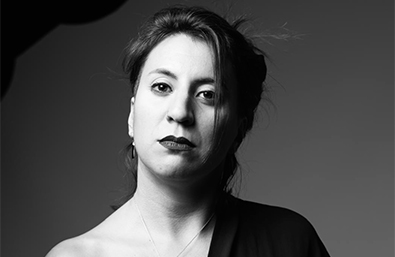 Born in Buenos Aires, she studied opera singing at the Manuel de Falla Conservatory and the University of the Arts. She then went on to complete a master's degree specializing in opera at the Conservatori del Liceu in Barcelona, Spain, under the guidance of tenor Eduard Giménez and soprano Mariana Ortiz.
As a soloist, she has performed roles such as Cherubino (Le nozze di Figaro), Clarina (Cámbiale di Matrimonio), Second and Third Ladies (The Magic Flute), and Giannetta (L'elisir d'amore).
As a chorus singer, she has worked in theaters such as the Teatro Colón, the Teatro Real, the Gran Teatre del Liceu, the Oviedo Opera House, and the Tenerife Auditorium. She is currently working with the Community of Madrid Choir.
María Luisa Corbacho (Mrs. Quickly) - mezzo-soprano
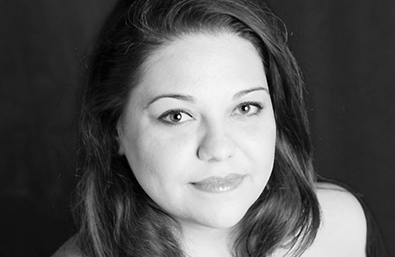 She began her career at the Teatre Principal in Palma de Mallorca. She has worked with director Emilio Sagi and La fura dels Baus, among other big names. She has played roles such as Santuzza (Cavalleria rusticana, Mascagni), Grandmother (Short life, Falla); by Puccini: Zia Principessa (Sister Angelica), Zitta (Gianni Schicchi), Suzuki (Madame Butterfly); by Verdi: Azucena (Il Trovatore), Amneris (Aida), Fenena (Nabucco), and Quickly herself (Falstaff).
She has also played Beltrana (Doña Francisquita, by Vives), Adriana (Los Gavilanes, Guerrero), Paloma (El barberillo de Lavapiés-Barbieri). And she has sung Mozart's Requiem , Verdi's Requiem , Mahler's Eighth Symphony, Stravinsky's Les Noces, Alexander Nevsky and Ivan the Terrible by Prokofiev.
She has been invited by the Teatro Real, La Maestranza, Teatro Campoamor, Staatstheater Cottbus, Palacio Eskalduna, Auditorio Baluarte, Teatro Cervantes in Malaga, Associació Amics de l'Òpera de Sabadell, Auditorio Nacional in Madrid, Gran Teatre del Liceu, Teatro de la Zarzuela, and Palau de la Música in Valencia.
Aida Turganbayeva (Nanetta) - soprano
 He has perfected his art at prestigious institutions such as the Escuela Superior de Canto in Madrid, the Conservatorio di Musica Giuseppe Tartini in Trieste, and the Mozarteum University in Salzburg.
With extensive stage experience, he has performed in renowned theaters such as the Teatro Real, the Teatro Retiro in Madrid, and the Teatro Verdi in Trieste, as well as the Mikhailovsky Theater in St. Petersburg (Russia). He has also participated in international festivals such as the Piccolo Opera Festival in Gorizia.
She has played prominent roles in zarzuelas and operas, such as Adina in Donizetti's L'elisir d'amore , Frasquita in Bizet's Carmen , Despina in Mozart's Così fan tutte, and l'enfant in Ravel's L'Enfant et les Sortilèges .
Jose Miguel Baena (Bardolfo) - tenor
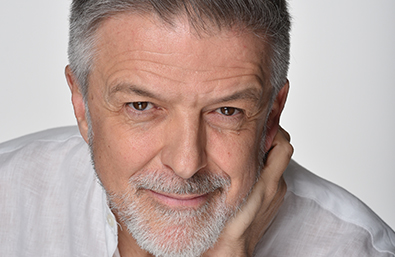 He began his training in Germany. He made his debut in 2007 as a baritone in the role of Giorgio Germont in La Traviata at the Gran Teatro de La Habana. She has sung roles such as Michele (The Cloak), Sharpless (Madame Butterfly), Noah (Noah's Flood, Britten), and Papageno (The Magic Flute) and performed oratorio works such as Carmina Burana (staged by La Fura dels Baus), the Messiah by Handel and the Requiem by Mozart and Fauré, under the baton of conductors such as Michael Thomas, Borja Quintas, Sergio Alapont, and José Luis Temes.
He currently works on vocal technique and tenor repertoire with Dale Fundling, in roles such as Otello, Canio, Chénier, Siegmund, Florestan, and Lohengrin. As an actor, he trained at Estudio Corazza and has worked with La Zaranda, Kamin Teatro in Moscow, and Compañía Tribueñe. As a librettist and narrator, he premiered Moby Dick at the Reina Sofía Museum (CNDM) and recorded Gargantúa for chamber orchestra and narrator.
Armando del Hoyo (Pistola) - bass
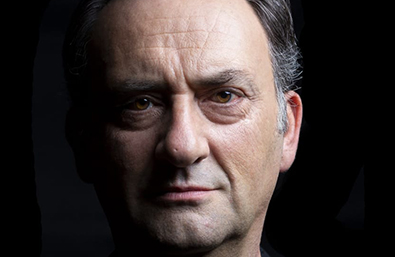 He began his musical studies at the Antonio de Cabezón Conservatory (Burgos) and continued at the Conservatorio Superior de Madrid.
Among the many roles he has played , the following stand out : Timur in Turandot, at Istana Budaya Kuala Lumpur (Malaysia); Don Basilio in The Barber of Seville, at the Mechelen Kortenberg Flamenco Festival (Belgium); Gremin in Eugene Onegin, in St. Petersburg (Russia); Sparafucile in Rigoletto at the Teatro Gran Vía Madrid and the Teatro Real; and the servant of Baron Ochs in Der Rosenkavalier (Strauss) at the Teatro de la Zarzuela. He has participated in national theater tours with the operas Aida, Tosca, and Madame Butterfly.
He is currently the artistic director of the galas at the monastery of Santa Maria de Rioseco and the Gala de Medina de Pomar, and the creator of the Festival Lírico de los Balcones.
Collaborators:


A production of:

Date
April 1, 2025
Time
7:30 p.m.